
Often a good fit if you have
- A stable curve, usually under about 60°
- Good erections, with or without tablets
- No hourglass narrowing or hinge effect
- Enough length that some shortening is acceptable to you
Peyronie's disease surgery
Plication straightens a curved penis by shortening its longer side. It is a relatively simple, well-established operation for stable Peyronie's disease, with one honest trade-off: the penis ends up somewhat shorter.
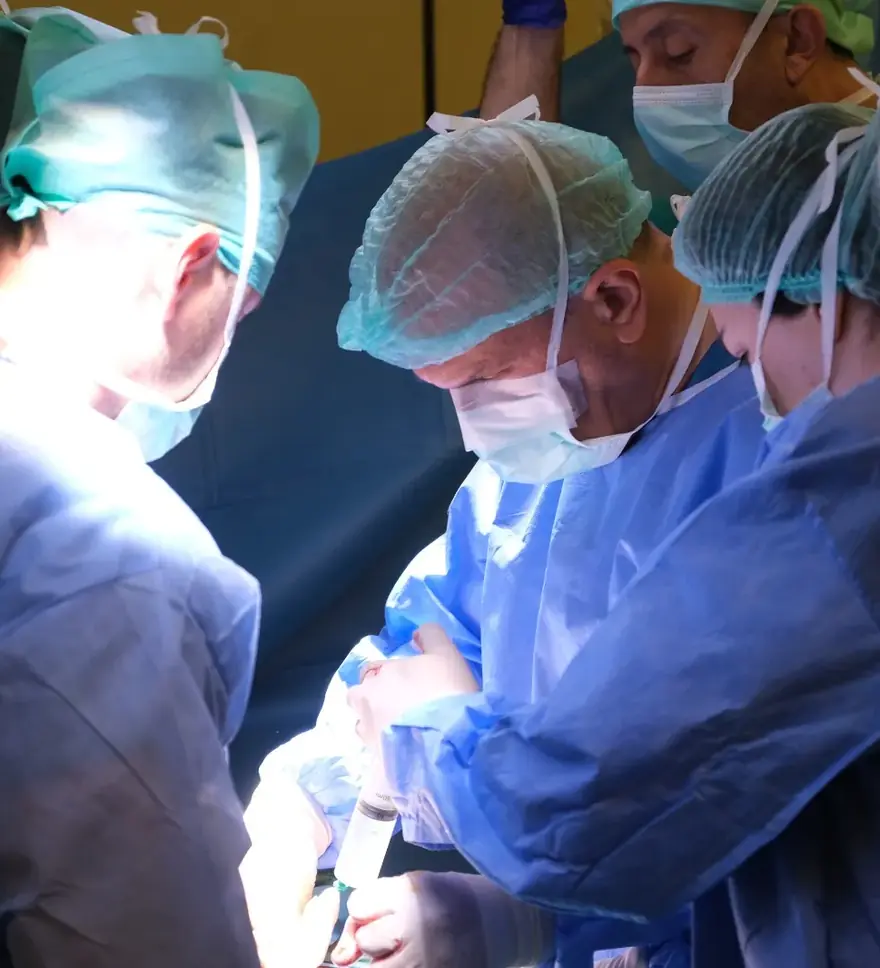
What it is
In Peyronie's disease, a plaque of scar tissue stops one side of the penis stretching, so the erect penis bends towards it. Plication does not touch the plaque. Instead, the surgeon shortens the opposite, healthy side so both sides match and the penis becomes straight.
"Nesbit procedure" and "plication" are often used interchangeably. Strictly speaking, the classic Nesbit operation removes small ellipses of tissue from the sheath around the erection chambers and closes the gaps, while plication techniques (including tunical albugineal plication, or TAP) fold the sheath with stitches without removing tissue. Your surgeon will choose the variation that suits your curve.
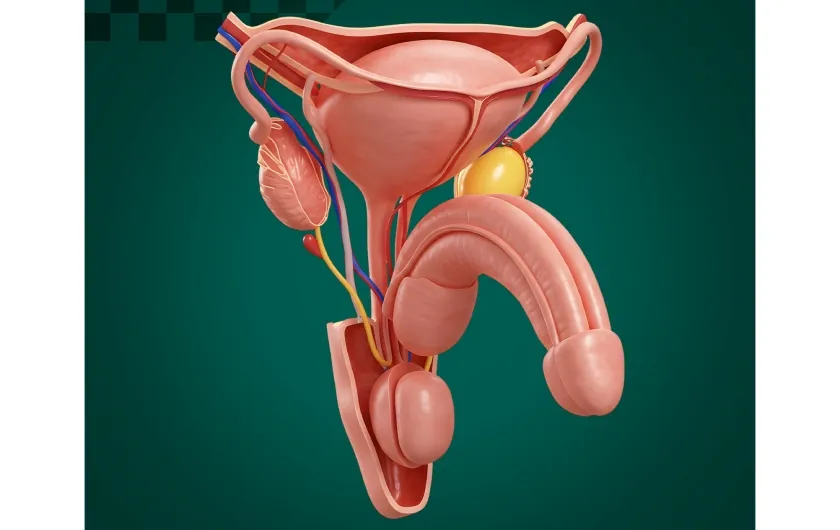
Plication works on the sheath around the erection chambers, on the side opposite the curve.
Who it suits
Plication is usually considered once Peyronie's disease has been stable for about three months. It is one of several options on the Peyronie's disease treatment ladder.
Being honest about length
Because plication shortens the longer side of the penis to match the shorter side, the straightened penis is somewhat shorter than a straight version of the same penis would have been. How much length is lost depends mainly on the angle of the curve: the larger the curve, the more shortening is needed to correct it.
Many men find the loss of length modest and acceptable in exchange for a straight, usable erection. Others, especially those who have already lost length to Peyronie's disease, prefer an approach that aims to limit shortening. Before surgery your surgeon measures your stretched length and the angle of the curve, and explains what to expect for your penis specifically.
The operation
The operation is carried out under general or spinal anaesthesia in hospital. The approach is planned in advance from your photographs and examination, then confirmed in theatre.
Most men return to their hotel after one night in hospital.
A small incision is made, usually around the head of the penis (circumcision line) or along the shaft, and the skin is gently moved back.
An erection is produced with saline so the surgeon can see exactly where and how much the penis bends.
Stitches are placed in the sheath on the longer side, or small ellipses of tissue are removed and closed, while protecting the nerves and blood vessels.
The erection is repeated to confirm the penis is straight, then the skin is closed with dissolvable stitches.
Before surgery
After surgery
| When | What usually happens |
|---|---|
| Day 1 | Dressing on the penis; usually home to your hotel after one night. |
| Week 1 | Swelling and bruising are normal and settle gradually. Keep the area clean and dry. |
| Days 7–10 | Wound check, in Istanbul or online. Desk work is often possible within days. |
| Week 6 | Intercourse and strenuous exercise usually resume once your surgeon confirms healing. |
Contact us promptly if you notice severe swelling, increasing pain, bleeding or discharge from the wound.
Risks you should know about. Plication carries the risks of any operation, including bleeding, bruising, haematoma and infection. Specific risks include loss of penile length, stitches that can be felt under the skin, altered or reduced sensation of the penis, a curve that is not fully corrected or returns over time, and, less often, weaker erections. Results vary, and your surgeon will discuss your individual risks before you decide.
Package
Plication is included in our Peyronie's disease surgery package. You receive a personalised quote after your free consultation.
Not sure whether plication or another technique suits you? Send us your history and photographs, or book a video consultation with the team of Prof. Dr. Ateş Kadıoğlu.
Personalised quote after your free consultation
They work on the same principle: shortening the longer side of the penis. The classic Nesbit operation removes small pieces of the sheath, while plication folds it with stitches. Both are often grouped together as plication procedures.
Yes, some loss of erect length is expected, and it is greater with larger curves. Your surgeon will estimate it for you before surgery.
An incision around the head of the penis is often used. Whether circumcision is advised depends on your foreskin and the approach; this is discussed with you beforehand.
Some men notice a degree of recurrence over time, for example if a stitch loosens or the disease was not fully stable. Operating only once the disease is stable lowers this risk.
Keep reading
Free, confidential, no obligation
Send us your question or medical reports. A member of our English-speaking team will reply, and where appropriate your case is reviewed by the surgeon before we suggest a plan.