Editorial
Written byMen's Health Istanbul Editorial Team
Medical reviewer (awaiting sign-off)Asst. Prof. Dr. Yusuf İlker Çömez
Published
Updated
Medically reviewedNot yet
The short answer
There is no single answer for every man, which is why PSA screening is debated. A large European trial found that PSA screening reduced deaths from prostate cancer, but it also led to substantial overdiagnosis. The US Preventive Services Task Force advises men aged 55 to 69 to make an individual decision after discussing benefits and harms, and recommends against routine screening from 70. European guidelines favour offering testing to well-informed men, with earlier discussion for those at higher risk, such as men with a family history. The right choice depends on age, risk and personal values.
Key takeaways
- The ERSPC trial found that PSA screening reduced prostate cancer deaths, at the cost of substantial overdiagnosis.
- The USPSTF advises an individual decision for men aged 55 to 69 and recommends against routine screening from 70.
- European guidelines support offering testing to informed men, earlier for those at higher risk.
- Modern care, including monitoring low-risk cancers, aims to reduce the harms of finding cancer early.
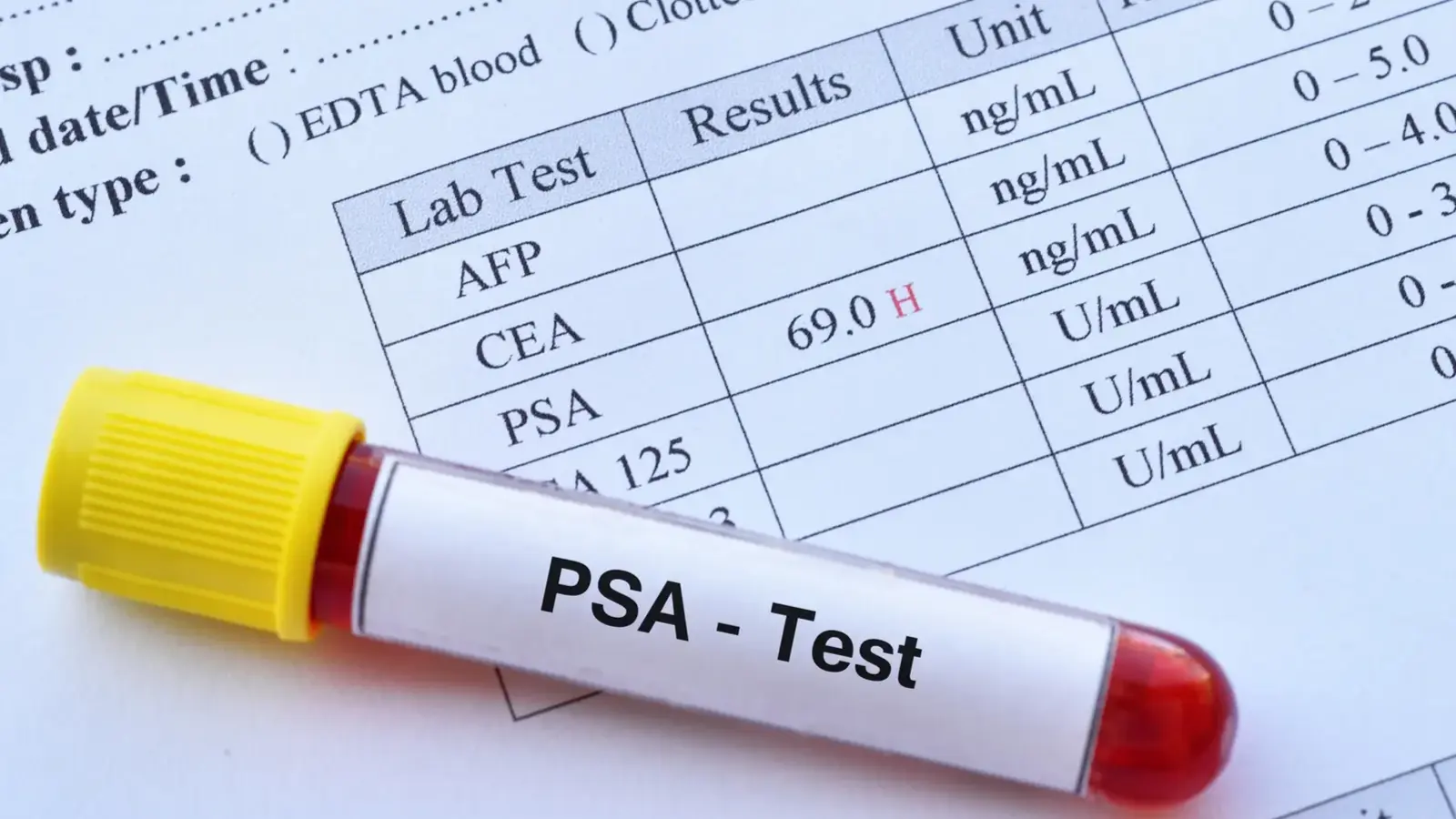
PSA (prostate-specific antigen) is a protein made by the prostate that can be measured in a simple blood test. Higher levels can be a sign of prostate cancer, but also of an enlarged prostate, infection or inflammation. Whether healthy men without symptoms should be tested routinely has been argued over for decades. This is a debate about screening men with no symptoms; men with urinary symptoms or other concerns should see a doctor regardless.
The case for
The strongest argument for screening comes from the European Randomized Study of Screening for Prostate Cancer (ERSPC), first reported in the New England Journal of Medicine in 2009. Men who were invited for regular PSA testing were less likely to die of prostate cancer than men who were not.
Supporters point out that prostate cancer often causes no symptoms in its early stages. By the time symptoms appear, it may have spread and become harder to treat. A blood test that can pick up cancer while it is still confined to the prostate gives men more options.
They also argue that the harms of screening are smaller than they used to be. Doctors can now use repeat tests, risk calculators and MRI scans to decide who needs a biopsy. And many men with low-risk cancer are offered active monitoring rather than immediate treatment. In the long-running ProtecT trial, reported at 15 years in 2023, deaths from prostate cancer were low, about 3%, and did not differ significantly between monitoring, surgery and radiotherapy.
Against, and the limitations
The main concern is overdiagnosis. The same ERSPC trial found that screening detected many cancers that would probably never have caused harm in a man's lifetime. Once a cancer is found, it can be hard, for patients and doctors alike, to leave it alone.
Treatment can have lasting side effects. In ProtecT, men who had surgery reported the greatest effects on sexual function and urinary continence, with some recovery over time, while radiotherapy affected bowel function early on. For a man whose cancer would never have threatened his life, those are costs without a benefit.
Critics also note the false alarms. A raised PSA leads to more tests, anxiety and sometimes a biopsy, only for many men to find there is no significant cancer. And the benefit of screening falls with age and with other health problems, because men are more likely to die of something else first.
What the evidence says
Both sides are, in part, right. Screening can reduce deaths from prostate cancer, and it can cause harm through overdiagnosis and overtreatment. That is why most guidelines now favour an informed, individual decision rather than a blanket rule.
- The US Preventive Services Task Force (2018) says men aged 55 to 69 should decide individually after discussing benefits and harms with a clinician, and recommends against routine screening for men aged 70 and over.
- The European Association of Urology supports offering PSA testing to well-informed men, using a risk-adapted approach, and starting the discussion earlier for men at higher risk, such as those with a family history of prostate cancer, men of Black African descent and carriers of certain inherited gene changes such as BRCA2.
- After a raised result, guidelines recommend further assessment, often including a repeat test and MRI, before any decision on biopsy.
In practice, the question is less "should everyone be tested?" and more "is this the right test for me, now?" Age, family history, general health and how a man feels about uncertainty all shape the answer. Our explainer on what the PSA test measures covers the test itself in more detail.
Questions men also ask
What is overdiagnosis in prostate cancer?
It means finding a cancer that would never have caused symptoms or shortened life. The man may then face tests or treatment, with possible side effects, that he did not need.
Does a raised PSA mean I have cancer?
No. PSA can also rise with an enlarged prostate, infection or inflammation. A raised result usually leads to a repeat test and further assessment rather than a diagnosis.
Sources & further reading
- New England Journal of Medicine Screening and Prostate-Cancer Mortality in a Randomized European Study (opens in a new tab) (2009) Schröder FH, et al.
- JAMA Screening for Prostate Cancer: US Preventive Services Task Force Recommendation Statement (opens in a new tab) (2018) US Preventive Services Task Force
- EAU EAU Guidelines on Prostate Cancer (opens in a new tab) (2024) European Association of Urology
- New England Journal of Medicine Fifteen-Year Outcomes after Monitoring, Surgery, or Radiotherapy for Prostate Cancer (opens in a new tab) (2023) Hamdy FC, et al.
- New England Journal of Medicine Patient-Reported Outcomes after Monitoring, Surgery, or Radiotherapy for Prostate Cancer (opens in a new tab) (2016) Donovan JL, et al.
Concerned about something you've read?
Ask one of our specialists privately. There is no obligation, and no question is too awkward.
This article is general health information. It does not replace an individual medical consultation, examination or diagnosis. Read our editorial policy and medical review policy.